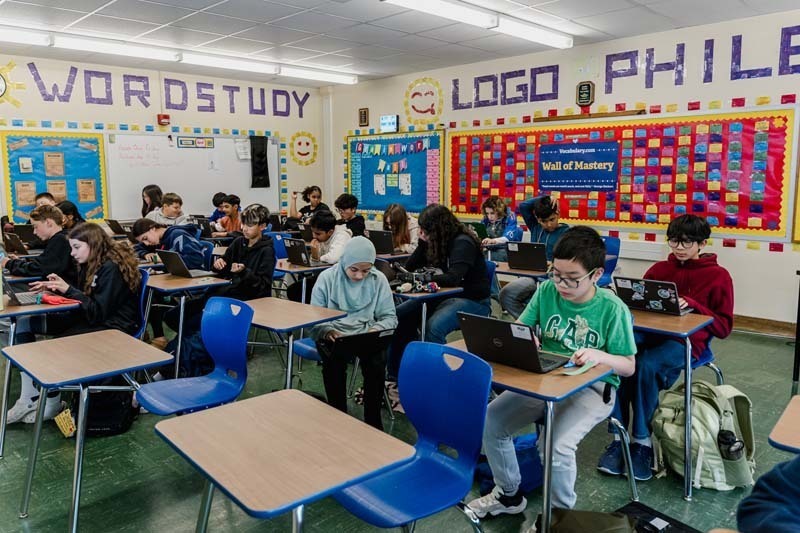
About ten years ago, it came time to reimagine how Word Study was taught at JFK Middle School. After years of a fairly traditional curriculum, teachers were ready to infuse some new energy into the lessons and find fresh ways to engage students. English teacher Leslie Green raised her hand to lead the charge.
What she built, anchored by the online platform Vocabulary.com, has turned Word Study into one of the most competitive and engaging classes in the building.
Ms. Green found Vocabulary.com through a simple Google search for vocabulary instruction in middle school. It was the first result. She liked what she saw: cross-curricular connections, games, achievements, badges and a scaffolded word acquisition strategy that cycles questions every few minutes to reinforce retention. She was hooked – and so, eventually, were her students.
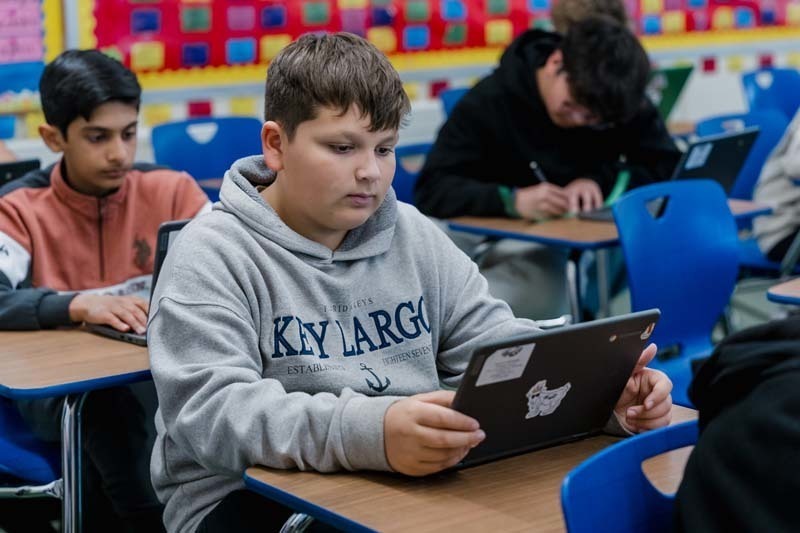
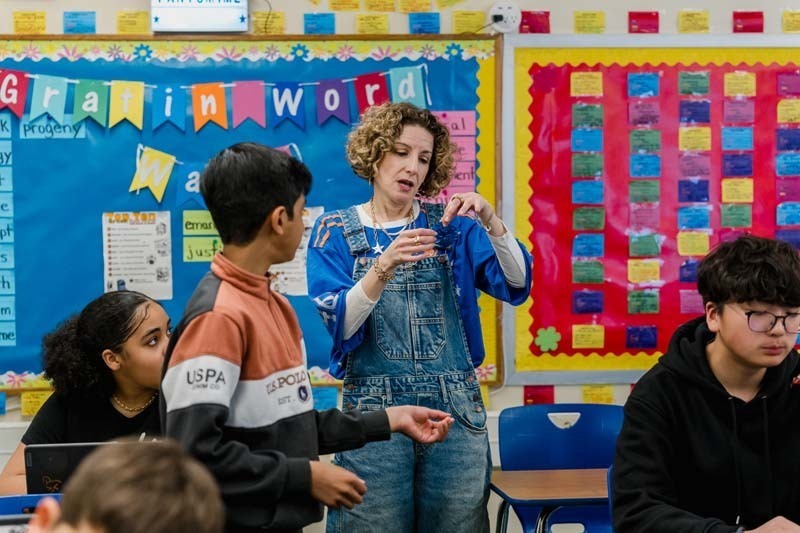
Greek and Latin roots form the foundation of her lessons, and students build outward from there. Each class, Ms. Green introduces a word of the day tied to a root, and students practice related words through assigned lists on Vocabulary.com – which they can also use to build their own lists for upcoming tests in other subjects.
I always ask them at the beginning of the week, what tests do you have this week? Ms. Green said. If they finish early, I encourage them to make a list of 10 vocabulary words (related to their tests) and master those.
The platform's approach is deliberately incremental. Words cycle through multiple rounds of questions, including spelling and aren't considered mastered until a student has answered correctly at least five times. Trouble words resurface repeatedly until they stick. Points, streaks, badges and avatar levels keep students engaged with their own progress – and each other's.
The friendly competition Ms. Green has built around the platform is, by any measure, working. One class alone has collectively amassed over 38,000 mastered words since February. Ms. Green teaches ten classes in all – a mix of seventh and eighth graders – each running one semester, meeting every other day.
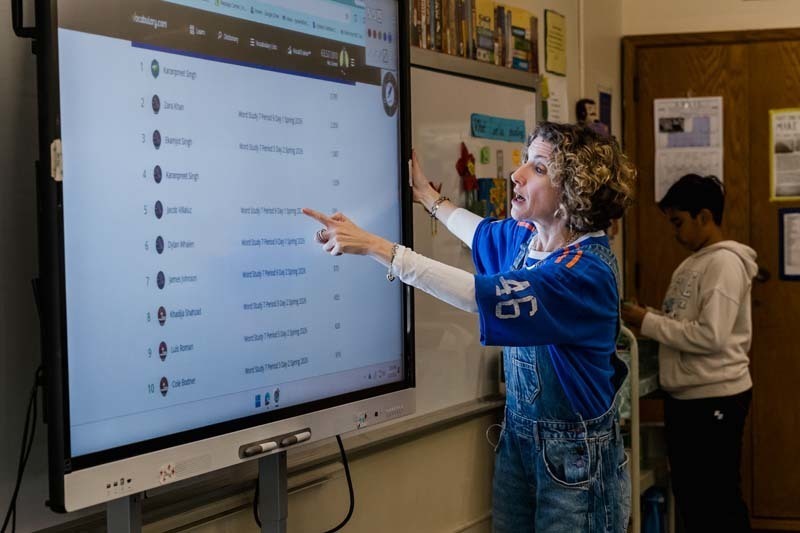
At the end of the year, the class with the highest average number of words mastered earns a party. The top 10 students receive individual recognition. A real-time leaderboard lets students track their standings not just against each other, but against classrooms across New York State and the country.
This year, JFK Middle School placed fourth nationally in a Vocabulary.com competition – the highest finish in the school's history. And in New York State? First place.
The impact extends beyond the leaderboard. Other English teachers have noticed students incorporating more sophisticated vocabulary into their writing. Students have drawn connections between English words and their Spanish and French counterparts, all sharing the same Greek and Latin roots. And Ms. Green sees the payoff at the end of every class, when she asks students to use a word they mastered that day in a sentence – without looking it up.
Nine times out of ten, they can, she said.
One student came to Ms. Green after taking the state ELA exam and said that practicing on Vocabulary.com had helped – she recognized words she had mastered in class.
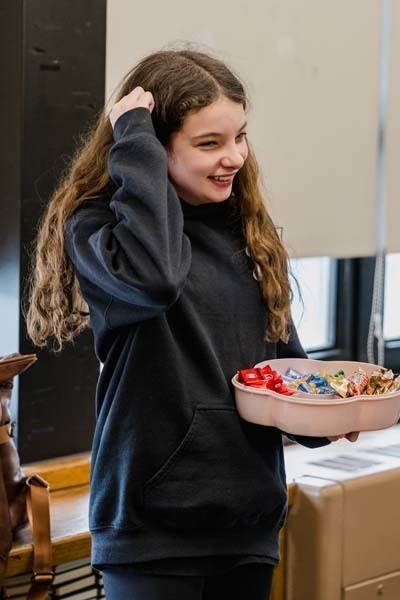
Nine years in, the program Ms. Green built from scratch has become something students look forward to. The candy she keeps on hand – a self-described Pavlov scenario – probably doesn't hurt. But the engagement goes deeper than that. Students ask each other questions, explain words to one another and get genuinely invested in seeing their avatar level up, their streak climb and their name rise on the leaderboard.
I think the motivation, Ms. Green said, is hopefully actually learning the words.
Based on everything her students are showing her — in class, in their writing and on their exams – it's working.