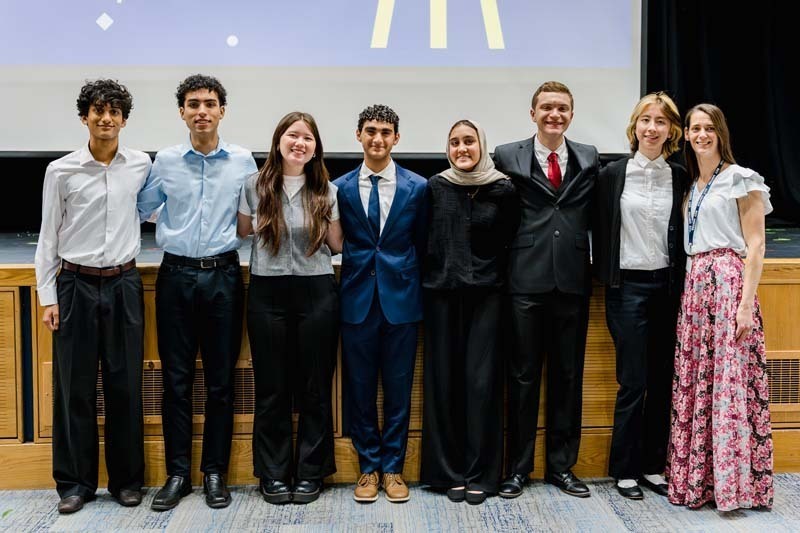
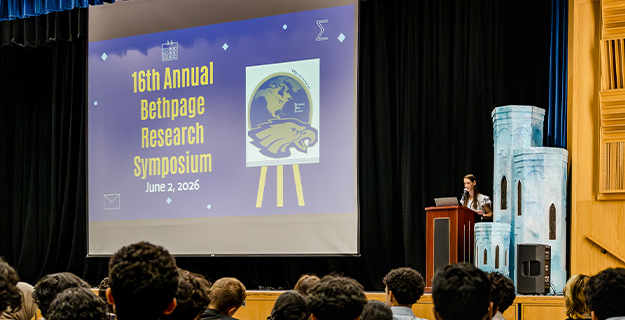
On June 2, Bethpage High School celebrated its 16th annual Science Research Symposium, a showcase of the remarkable work by students in the school's Science Research program, led by Ms. Nicole Dulaney.
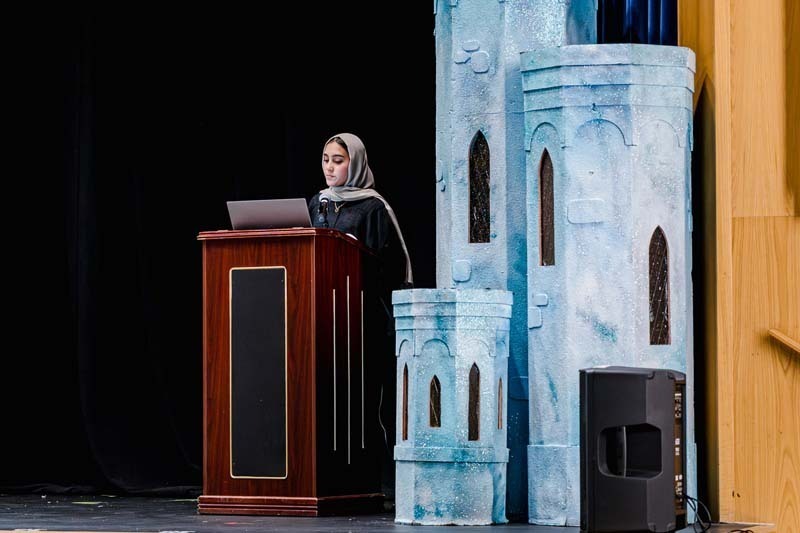
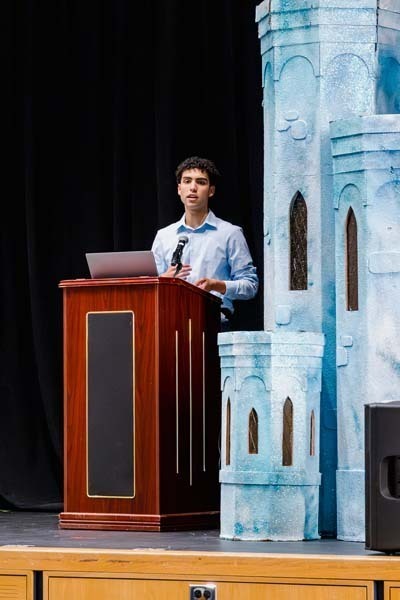
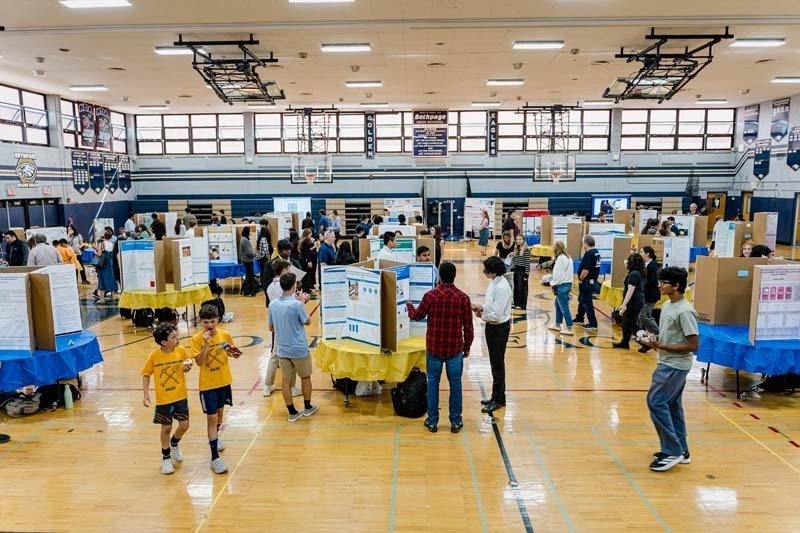
The symposium opened with presentations in the auditorium by the program's senior members, followed by an open house in the gymnasium featuring project displays by students in Research 1, 2 and 3, as well as AP Research.
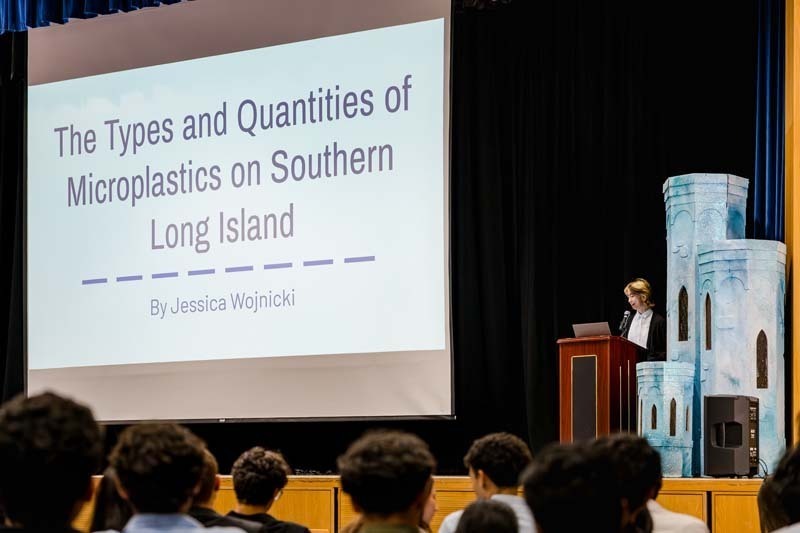
Senior presentations covered a wide range of topics: Sarah Oh examined how guitar string treatment affects corrosion rates; Insiya Chatriwala investigated how rosemary-derived antioxidants mitigate the microbial oxidation of ascorbic acid; Matthew Tusa proposed a cost-effective method for recording and maintaining accountability for individuals in addiction recovery; Aryaan Khalfan developed a cost-effective device for translating American Sign Language using machine learning; Benjamin Maciel-Seidman explored scalable perturbation screening using imaging and protein-based barcodes; Jessica Wojnicki studied the types and quantities of microplastics found on Southern Long Island; and Andres Bonetti investigated how particulate matter accumulation affects the elemental composition of plants.
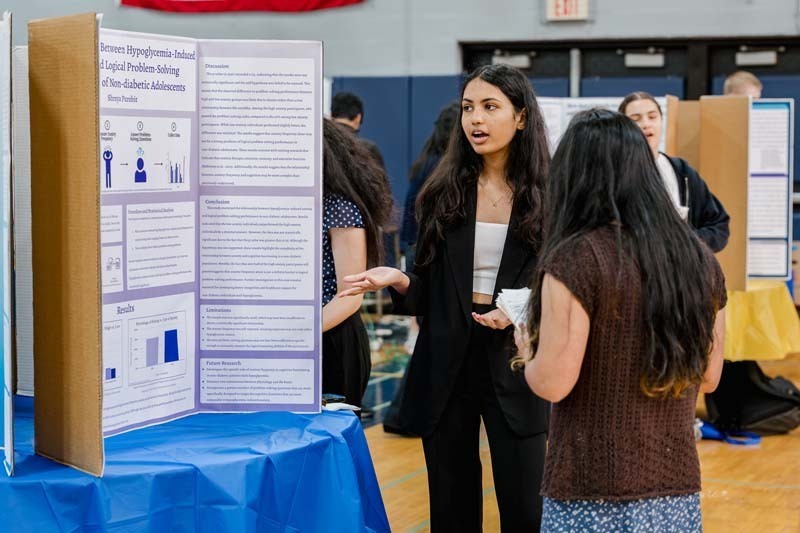
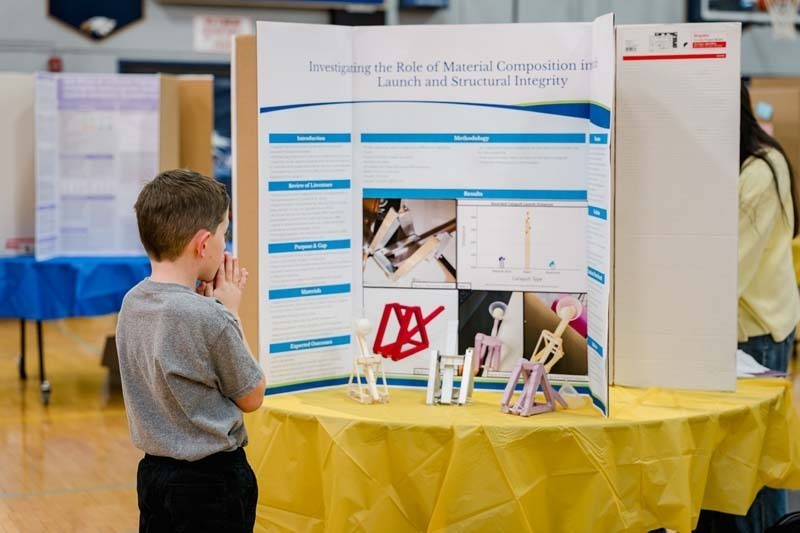
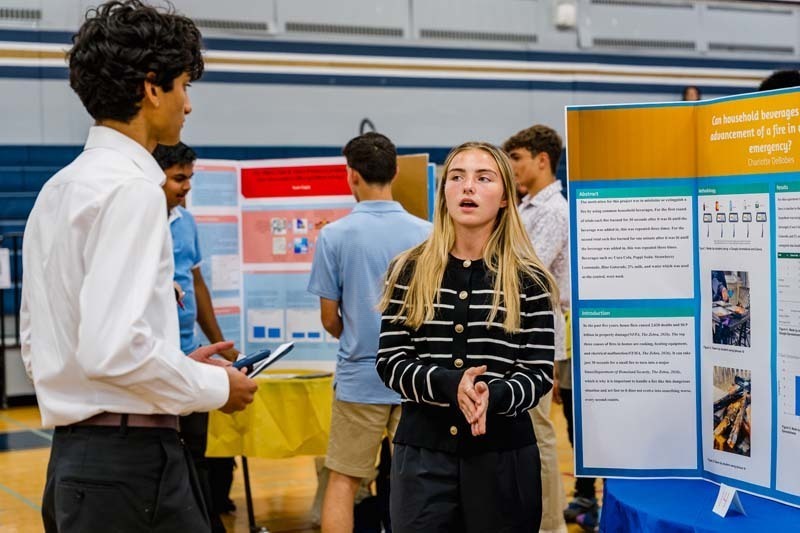
Guests then moved to the gymnasium for the poster session, which also announced the winners of the Research 1 competition, recognizing outstanding first-year projects. Loveen Kaur, Maahira Kaur and Catherine Xu took first place for Comparing the Effects of Natural and Artificial Soap on Escherichia coli K-12. Jasleen Kaur earned second place for Effects of Mediterranean and Western Diets on Locomotor Performance in Drosophila melanogaster and Alanna Chan and Nila Jimkelly placed third for The Effect of Onion Powder on the Growth of Escherichia coli K-12 Compared to Raw Onion.
Student voting added an extra layer of excitement to the afternoon. Eva Rojas and Gabriella MacDougall received the Most Original award for their project investigating whether candy can serve as a substitute for fertilizer. Sonia Wei and Suraya Shariff earned the Biggest Potential Impact award for their study comparing how AI and high school students handle basic factual questions and assess difficulty levels. Romaan Ahmed took home the Most Professional Poster award for his research on the effect of the SARS-CoV-2 pandemic on role-play video game engagement among high school students.
The symposium celebrated curiosity, experimentation and the power of student-driven research.